
Globally, the Indian pharmacy and healthcare industry has been a trailblazer in innovating low-cost services and manufacturing medicines for both Indian and global markets. This sector is now at an inflection point; with the advent of artificial intelligence, there has been an opening of new innovative companies in this space. These companies are leveraging technology not only to extend value engineering which had been the norm but also to innovate in new areas, such as business models, software, and products.
This rapid growth in technology and its adoption, along with an increase in GDP and consumer spending, is fueling demand for new products and services in a sector that is struggling with underfunded and overstretched infrastructure. India’s healthcare sector faces significant challenges, including a high burden of chronic diseases, a rapidly aging population, and a doctor-to-patient ratio that falls far below the recommendations set by the World Health Organization.
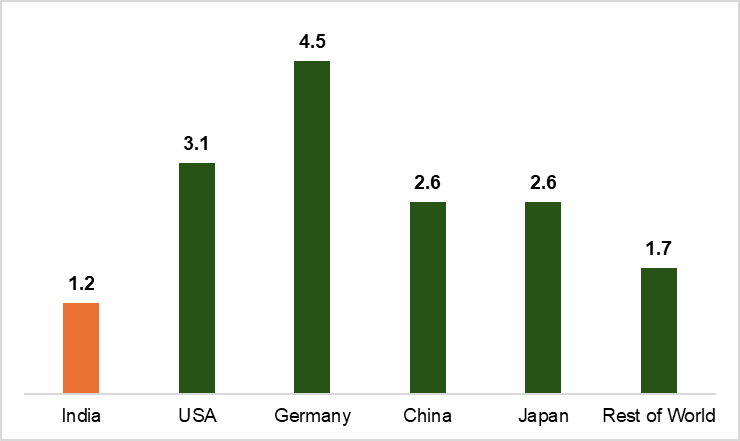
Fig:1: No. of Doctors per 1000 people
Amid these systemic challenges, the first wave of startups began reshaping how care could be brought to patients. Leveraging technology, innovative service delivery, and patient-centric models, these companies encompassed three sectors in space: teleconsulting, pharmaceutical delivery, and the fitness and wellness industry. By prioritizing patient care models over traditional, infrastructure-heavy systems, companies like Practo and 1mg have been able to provide scalable and adaptable solutions within the healthcare industry.
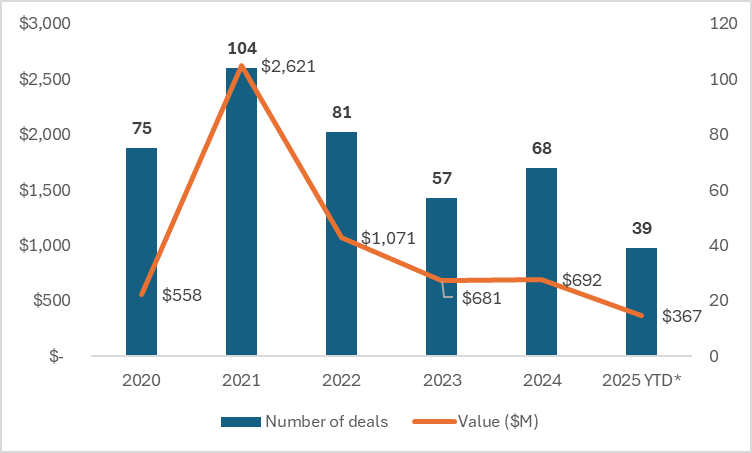
Fig:2- VC Investments in Health tech Startups in India
This emergence of patient-centric startups led to an increasing flow of capital from venture capital firms to this segment. One of the biggest contributions the first wave of startups in this space made was laying the foundation for more integrated and data-driven care. At the same time, these platforms and the pandemic have significantly influenced consumer behavior, leading to a growing awareness among Indians about the importance of preventive health and wellness.
While the initial wave of startups has established a foundation for transforming India into a more patient-centric healthcare society, we at Argan believe that the upcoming second wave of startups will concentrate on chronic diseases, specialty care, and the application of AI to enhance healthcare solutions.
Here is where we see opportunity in the second wave:
- EmployingArtificial Intelligence for better healthcare outcomes: The emergence of AI can be utilized to address the complex challenges facing AI solutions can augment the scarce personnel and lab facilities, help overcome the barriers to access, solve the accessibility problems, and, through early detection, diagnostics, decision-making, and treatment, cater to a large part of India.
- ChronicDisease Management: In the last three decades, the acute disease burden in India has reduced exponentially, while the chronic diseases (non- communicable, like cardiac diseases, diabetes) have increased from 38% to 61.8% of the total disease burden in The scope of innovation in this field lies across the continuum of care, ranging from early detection to personalized treatment plans to remote monitoring to post-care management. With rising disposable incomes coupled with greater healthcare awareness, patients are increasingly willing to adopt preventive solutions. This convergence of demand, technology, and the current market landscape creates fertile ground for startups to build sustainable models that can alleviate a patient’s life.
- Single Specialty Clinics and Hospitals:The Indian single-specialty market is currently valued at $16 billion is projected to more than double in the next two to three years. These types of hospitals can tackle the infrastructural and talent shortages as talked about above by using their lean, replicable models that enable faster expansions even in tier-2 and 3 cities. These clinics and hospitals also employ novel treatment protocols like chemotherapy in oncology, which have led to positive results and growing patient With medical tourism also rising rapidly in the country, the sector is ripe for exponential growth. All these trends underscore specialty care’s emergence as one of India’s fastest-growing, capital- efficient, and scalable sectors.
Outside of these sub-sectors, we also believe that there is still a big market gap in healthcare financing and healthcare SaaS. Given the low penetration of medical insurance in India, financing solutions are crucial, especially as the incidence of diseases continues to increase. At the same time, healthcare SaaS platforms that streamline hospital operations, enable electronic medical record management, and provide predictive analytics for clinicians remain vastly underpenetrated in India. As providers look to improve efficiency and patient outcomes while keeping costs under control, these two areas present transformative opportunities for startups.
While the sector presents significant opportunities for innovation and growth, we acknowledge that there are still several major obstacles that can hinder a startup in this field. One of the biggest challenges has been monetizing direct-to-consumer, which can be attributed to the lack of health insurance penetration in this country, with 70% of Indians still not covered. There are also steep regulatory challenges that are faced in this sector. For instance, the Central Drugs Standard Control Organization can take a while to give approvals to companies building hardware or life science-based products.
Given the opportunities and challenges outlined, along with our experience, we recognize that establishing a sustainable company in the healthcare sector demands patience, a thorough understanding of the domain, knowledge of regulatory requirements, and empathy for end consumers. With the focus on how technology can help improve and save lives, we are excited about opportunities in this sector and the number of visionary founders with deep sector expertise capable of helping solve the country’s healthcare challenges.
If you are building for India’s healthcare industry by leveraging technology, we would love to hear from you at info@argan.global
Source:
1: World Bank: https://data.worldbank.org/indicator/SH.MED.PHYS.ZS
2: Venture Intelligence